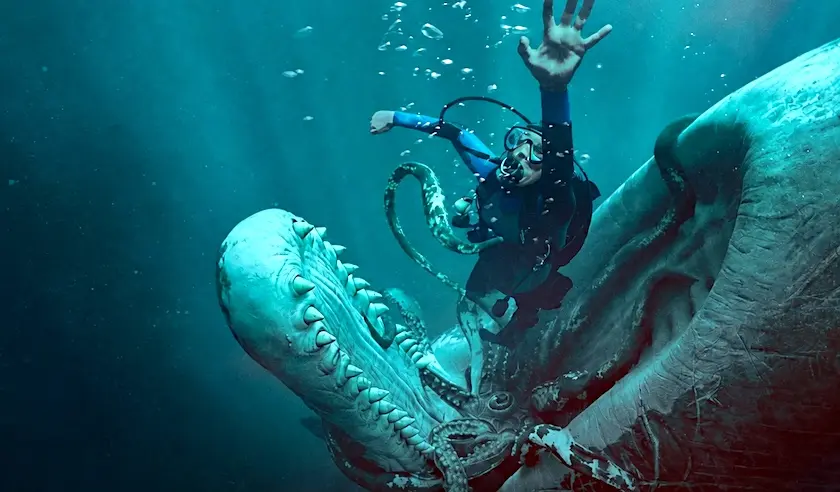
A game can have 3D graphics without requiring 3D glasses. A cinema screening advertised as 3D, meanwhile, usually asks you to put a pair on. The apparent contradiction comes from the fact that “3D” can describe two different things: the space represented in an image and the way that image reaches your eyes. A character can have convincing volume on an ordinary screen. Seeing a separate view with each eye is a different part of the experience.
The distinction begins during production. In a Weta FX interview about Avatar: Fire and Ash, the filmmakers describe bringing Oona Chaplin’s performance to Varang’s digital model. The work involved decisions about skin texture, costume materials and the appearance of the character’s face. The artists tested makeup and costumes on people under lighting, checking how different materials affected the result.
More on Screen Realm:


Their account connects physical reference with digital character work: details observed in front of a camera helped inform the figure seen on screen. That is work on the character being depicted — her shape, surface and movement. It does not, by itself, explain how the finished picture will be presented to an audience. A 2D presentation can preserve that modelled shape, surface detail and performance without delivering a separate image to each eye.
When 3D Describes the Graphics
Slot games, known as pokies in Australia, also use “3D” to describe their visual presentation. The 3D category within Joe Fortune’s online pokies uses the term to describe enhanced graphics, characters and themed presentation, with no special glasses required. The reel format remains recognisable beneath that presentation. Symbols, animated characters and themed surroundings can give a game a sense of space while it runs on a normal desktop or mobile screen.
A slot’s animated setting and its reels also perform different jobs. The setting establishes the theme; the reels present the symbols involved in play. Calling the presentation 3D does not establish that the player can move through that setting or control a freely moving camera. Nor does the label alone reveal how the artwork was made. Those are separate features and need their own descriptions.
A character’s apparent distance from the reels belongs to the composition of the picture. It should not be confused with a display sending that character’s image to each eye from a slightly different viewpoint.
The same distinction applies to computer graphics more broadly. A three-dimensional model represents an object with depth, but a screen can show a single view of it. Perspective makes equally sized objects appear smaller with distance, shading suggests curvature and one object can hide part of another. These cues help a flat picture communicate space. They are familiar from photography and drawing too, so an image does not need to deliver separate views to your eyes to look dimensional.
Movement adds further information. When a viewpoint changes, different surfaces become visible and objects shift against their backgrounds. That can make a digital environment easier to understand, but the moving image can still be shown as a conventional picture.
A screenshot preserves one moment from that sequence. It may lose the movement while retaining the perspective, shadows and overlapping shapes that suggest depth. A movie can supply that changing viewpoint through its camera movement. A game may tie it to player input or keep the viewpoint fixed throughout an animation.
When 3D Describes What Each Eye Sees
Stereoscopic presentation introduces another cue: slightly different views for the left and right eyes. The difference between those views helps the brain perceive depth. At a 3D screening, glasses separate the different views intended for each eye. Each eye receives a slightly different view of the same scene, so the screen’s physical flatness does not prevent a stereoscopic depth effect.
Glasses are not the only way to separate those views. In its engineering interview about the Odyssey 3D monitor, Samsung explains a system combining eye tracking, view mapping and a lenticular lens. Cameras locate the viewer’s eyes, the system calculates where the images should be positioned and the lens directs the appropriate image towards each eye. Tracking lets the system adjust those views as the viewer moves, keeping the delivery aligned with their changing position.
“No glasses” therefore describes two different situations. An ordinary screen can show dimensional artwork without stereoscopic delivery. A specialised display can deliver stereoscopic images without glasses. The absence of eyewear does not tell you which is happening. The display’s specifications and the content it supports provide that answer.
Read the Description Beyond the Label
A description of 3D graphics answers a question about appearance. It may discuss modelled characters, lighting, animation or settings. A description of stereoscopic viewing answers a question about image delivery and should explain the required display or viewing setup.
These details are more informative than the label alone, particularly when the same word appears in a film listing, a game category and a monitor announcement.
There is a third question worth keeping separate: what can you do? A scene can appear deep while offering only fixed controls. An interactive environment can let you change the viewpoint while remaining a conventional image on your screen. Neither interactivity nor realistic graphics guarantees stereoscopic presentation.
Before treating “3D” as a promise, identify whether the description concerns the picture, the viewing system or the controls. Only then does it tell you what to expect.