Robert Pattinson didn’t just escape the enormous shadow of Twilight. He torched the rulebook on what a post-franchise career was supposed to look like. After spending five films brooding and sparkling as Edward Cullen, and becoming one of the biggest heartthrobs on the planet in the process, Pattinson could have comfortably ridden movie-star status for years. Instead, thankfully, he got weird.
Working with filmmakers including David Cronenberg, Claire Denis, Robert Eggers, the Safdie brothers, Bong Joon-ho and Christopher Nolan, Pattinson spent the years after Edward Cullen chasing difficult characters, strange voices, wild accents and challenging movies that had little interest in preserving that pin-up image.
And it worked. The conversation around Pattinson gradually shifted from “the guy from Twilight” to one of the most unpredictable actors of his generation. He eventually returned to enormous studio filmmaking as Batman, but by then his adventurous choices and demonstrated range meant he was no longer anyone to underestimate.
More on Screen Realm:


With Primetime providing yet another major transformation, this time into To Catch a Predator host Chris Hansen, we’re looking back at 10 performances that helped Pattinson leave Cullen very, very far behind.
Cosmopolis (2012)

Pattinson hadn’t even officially finished with Twilight when he started ripping apart expectations. David Cronenberg’s cold, strange and deliberately alienating Cosmopolis cast him as Eric Packer, an obscenely wealthy young financier crawling across Manhattan in a limousine while his financial empire, personal life and grip on reality begin to disintegrate.
It was almost an inspired act of image sabotage. Cronenberg took the cool, beautiful remoteness audiences associated with Pattinson and turned it into something unsettling. Packer is detached, arrogant, empty and increasingly reckless, and Pattinson refuses to soften him for the audience.
The Rover (2014)

If Cosmopolis started changing minds, Australian filmmaker David Michôd’s The Rover kicked the process into another gear.
Against Guy Pearce’s hardened drifter, Pattinson plays Rey, a wounded, nervy young man abandoned by his brother in a brutal near-future Australian wasteland. The movie strips away just about every trace of movie-star polish. Pattinson is twitchy, vulnerable, awkward and occasionally heartbreaking, complete with a distinctive Southern accent and a physicality that makes Rey look permanently uncomfortable in his own skin. It’s the kind of performance that can make you forget you’re watching Robert Pattinson at all.
The Lost City of Z (2016)

Pattinson does almost the opposite in James Gray’s sweeping adventure drama The Lost City of Z.
The role of British explorer Henry Costin allows him to disappear into a supporting part rather than fight for attention. Hidden beneath a heavy beard and playing things with remarkable restraint, Pattinson lets Charlie Hunnam’s Percy Fawcett remain the centre of the story while quietly becoming one of the film’s most memorable presences.
There are no big actorly fireworks, and that’s precisely what makes it work. Costin gives Pattinson the chance to show how effective he can be when understated, slipping into the fabric of the film rather than trying to dominate it.
Good Time (2017)

Then came Good Time. If there was one performance that finally forced the remaining Pattinson sceptics to reconsider, this was probably it.
Josh and Benny Safdie cast him as Connie Nikas, a small-time criminal desperately scrambling through New York after a botched bank robbery lands his brother in custody. Connie spends almost the entire movie improvising one terrible solution after another, dragging everyone around him deeper into his mess.
Pattinson is electric. He’s grubby, manipulative, frantic and frighteningly convincing as a man whose ability to keep moving is just about the only thing preventing everything from collapsing. Pattinson throws himself headfirst into Connie’s desperation and gives the film the nervous pulse that keeps it racing forward.
Good Time didn’t just become one of Pattinson’s defining performances. It helped completely reshape the kind of roles audiences expected to see him take on.
High Life (2018)

Naturally, he followed that career-changing performance by heading into deep space with Claire Denis for one of the strangest films of his career.
In High Life, Pattinson plays Monte, one of a group of prisoners sent on a dangerous mission towards a black hole. The film tackles isolation, sexuality, reproduction, violence and parenthood in ways that range from hypnotic to deeply confronting.
Monte isn’t another Connie Nikas-style explosion. Much of the performance comes from stillness, exhaustion and the fragile connection he develops with a baby aboard the ship. Pattinson gives the bizarre material an emotional anchor without trying to make any of it more conventional, delivering one of his quieter and more vulnerable performances.
The Lighthouse (2019)

Being locked in a lighthouse with Willem Dafoe sounds exhausting enough. Having to go toe-to-toe with Willem Dafoe operating at maximum Willem Dafoe is something else entirely.
Robert Eggers’ The Lighthouse gives both actors enormous amounts to chew on as two lighthouse keepers slowly drive each other, and possibly themselves, insane on an isolated island.
Pattinson starts comparatively restrained, but that doesn’t last long. Anger, paranoia, guilt, drunkenness, sexual frustration and outright madness gradually come spilling out, giving him some of the most ferocious material of his career.
It’s also very funny. Pattinson’s willingness to look ridiculous is crucial to the whole thing, particularly opposite Dafoe’s gloriously theatrical performance. By the time Pattinson is crawling around barking like an animal, the sparkling vampire feels like he belonged to another actor’s career.
The King (2019)

Pattinson isn’t in The King for very long. He makes absolutely sure you remember that he was.
Playing the Dauphin of France opposite Timothée Chalamet’s Henry V, Pattinson sweeps into the film with flowing blond hair, an outrageous French accent and enough sneering arrogance to power a much bigger role. It could have been ridiculous, and, to be fair, it kind of is ridiculous. That’s part of why it’s so entertaining.
Pattinson understands exactly what register he’s working in, turning the Dauphin into a wonderfully obnoxious antagonist who seems to relish every opportunity to sneer, threaten and humiliate. It’s a relatively small role, but he attacks it with enough theatrical swagger to steal several scenes outright.
The Batman (2022)
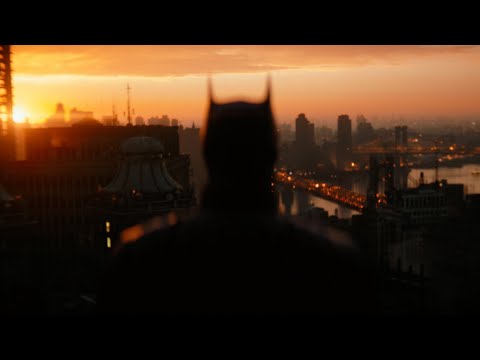
One of the funniest aspects of the initial backlash to Robert Pattinson being cast as Batman was that there were still people who thought Twilight represented what he could do.
By the time Matt Reeves’ The Batman arrived, Pattinson had spent a decade building one of the strangest post-franchise filmographies in Hollywood. Bruce Wayne almost felt like the conventional choice.
Rather than the polished billionaire playboy audiences had seen before, Pattinson plays Wayne as an isolated, obsessive and emotionally damaged recluse who seems considerably more comfortable behind the Batman mask than without it.
Most impressively, he does enormous amounts while barely showing his face. The stare, the posture, the controlled anger and the sheer physical presence do much of the work. Pattinson had spent years embracing smaller, riskier films; The Batman showed he could bring all of that intensity back to the centre of a massive blockbuster. Safe to say, I’m very keen to see where Pattinson takes the character next.
Mickey 17 (2025)

Bong Joon-ho looked at Robert Pattinson and apparently decided one of him wasn’t enough.
In Mickey 17, Pattinson plays Mickey Barnes, an “Expendable” sent to colonise an icy planet with one particularly unpleasant job requirement: whenever he dies, another version of him is printed and sent back to work.
His nervous, put-upon Mickey 17 is worlds away from the more aggressive Mickey 18, with Pattinson altering his voice, physicality and energy enough that scenes between the two become showcases for just how playful he can be.
It’s broad, odd and frequently very funny, with Pattinson seemingly delighted to make one of the world’s most recognisable movie stars look and sound as peculiar as possible.
The Odyssey (2026)

And then Christopher Nolan handed him Homer. Pattinson plays Antinous, the most dangerous of the suitors circling Penelope while Odysseus remains missing in The Odyssey, and he embraces the villainy with obvious relish. His delivery of “Will somebody get these beggars out of here?!” quickly became one of the film’s most viral lines.
This isn’t the tortured inwardness of The Batman or the frantic desperation of Good Time. Pattinson gets to be openly nasty here: manipulative, predatory, entitled and unpredictable, bringing a sharp edge to a character who could easily have been swallowed by the sheer scale of Nolan’s epic. Instead, he holds his own in a film absolutely packed with major stars.
It’s a fitting reminder of what has made Pattinson’s post-Twilight career so much fun to follow. There isn’t really a Robert Pattinson “type” anymore. Give him a billionaire, a criminal, a lighthouse keeper, Batman, a disposable space worker or an ancient Greek villain and there’s a decent chance he’ll find something unexpected to do with it.
Twilight made Robert Pattinson famous. Everything that came afterwards made him fascinating.
Also Check Out:
Who Is Callina Liang? Meet the Rising Star Playing Chun-Li in ‘Street Fighter’
‘Eyes Wide Shut’ Missing 20 Minutes: The Conspiracy, the Censorship and Vivian Kubrick’s Response