[Watch our review above and/or read it below!]
After nearly three decades of world-saving, mask-peeling, and gravity-defying stunts, Tom Cruise returns as Ethan Hunt in Mission: Impossible – The Final Reckoning, the latest high-octane chapter in one of Hollywood’s most enduring action franchises. Directed once again by Christopher McQuarrie, this eighth entry leans into its possible-finale status with a mix of reverence, spectacle, self-awareness, and, occasionally, self-importance. The result is a mostly satisfying blockbuster that delivers where it counts – even as it stumbles through some frustrating narrative clutter.
More on Screen Realm:


Picking up in the wake of Dead Reckoning, the film finds Hunt (Cruise, every bit the cinematic star he’s always been) facing his most daunting threat yet: a rogue AI known as the Entity. The world’s power systems are crumbling, nuclear codes are compromised, and superpowers are on the brink of global meltdown. And, as always, it’s up to Hunt — sprinting full tilt, of course — to fix it.
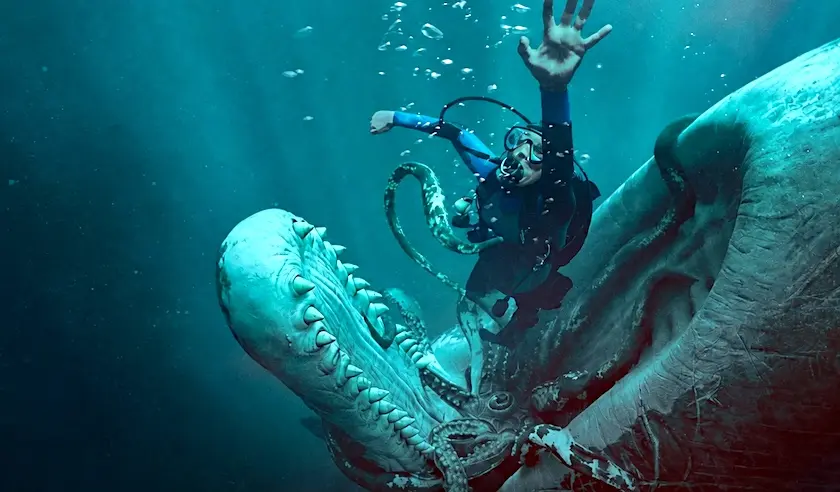
Let’s get this out of the way: the action is incredible. The two major set pieces here are stunners – and arguably worth the price of admission alone. An extended submarine dive is tense, beautifully designed, and breathtaking in execution. And then there’s the biplane sequence, which has been teased in trailers but still manages to drop jaws when it finally unfolds on screen. I saw this in IMAX and can confirm: cheeks clenched, heart pounding. It remains wildly entertaining to watch Cruise risk life and limb for a shot.
But in between the fun action and jaw-dropping moments is a film that frequently gets in its own way. The film, particularly in its first hour, is bogged down in relentless exposition – characters explaining, reiterating, and clarifying the stakes with such frequency and urgency it almost becomes comical. There’s an undeniable rhythm to these films by now: exposition, set piece, repeat. But here, the exposition is needlessly dense and overly edited, jumping between characters and locations with a jittery hand, all in service of information that’s actually quite simple. At a certain point, the endless clarifications start to feel like white noise.
Tom Cruise once again proves he’s not just here for the stunts. His performance brings a grounded intensity that gives Ethan Hunt emotional depth, not just physical grit. There’s a palpable sense of guilt and fear driving him this time — echoes of loss and consequence that the film gestures toward, even if it rarely slows down to truly sit with them. It’s a shame, because those moments hint at something richer. Tonally, the film rides the line between serious and slick, but could’ve used a few more breaths of levity. Simon Pegg’s Benji, usually the franchise’s reliable source of humour, feels a little sidelined in that department. Still, Cruise’s commitment holds it all together — an anchor in the chaos, even when the emotional beats don’t always get their due.

The supporting cast fares well, even if few are given much room to shine. Hayley Atwell’s Grace has the most to do and makes a strong impression, her chemistry with Cruise landing at the right moments. Pom Klementieff returns as Paris, but functions more as connective tissue to the previous film than a key player here. And while newcomers like Greg Tarzan Davis are serviceable, they ultimately feel a bit tacked on – passengers in what’s still very much the Tom Cruise show.
As for the villains: the Entity functions well enough as a looming presence – its all-seeing digital reach is timely, and the potential for global annihilation gives the story immediate, tangible stakes. It’s easy to get behind Ethan’s mission when the endgame is quite literally the end of the world. Still, for all its relevance, the AI threat feels underdeveloped on a conceptual level. Science fiction has long explored artificial intelligence in far more nuanced ways, and here it serves more as a narrative device than a fully fleshed-out idea. The danger is clear, but the imagination behind it feels limited.
Esai Morales’ Gabriel, meanwhile, made a stronger impression as a lurking presence in Dead Reckoning. Here, he’s brought out into the open, and despite Morales’ magnetic screen presence, Gabriel lands as a flat and uninspired antagonist. His motivations are wafer-thin, and his cartoonish flair undercuts any real menace he might have had.
The Final Reckoning is far from flawless, but it’s still a hell of a ride. The spectacle is undeniable, the ambition is huge, and Tom Cruise remains a cinematic force, both in sheer physicality and in screen presence. Yes, the film gets tangled in its own plot wires and occasionally confuses speed for momentum, but when it soars, it really soars. If this does end up being Hunt’s final mission, it’s a worthy curtain call – flawed, frantic, but fuelled by the same reckless dedication that’s kept this franchise alive for nearly 30 years. And if it’s not the end? I’ll still be there, watching Cruise run like the fate of cinema depends on it.