Well, look who’s back from the dead. After more than a decade of false starts, abandoned versions and enough development hell to make the zombie apocalypse look straightforward, World War Z 2 is finally showing some serious signs of life. Brad Pitt is returning, and the sequel now has an acclaimed filmmaker preparing to unleash the undead all over again.
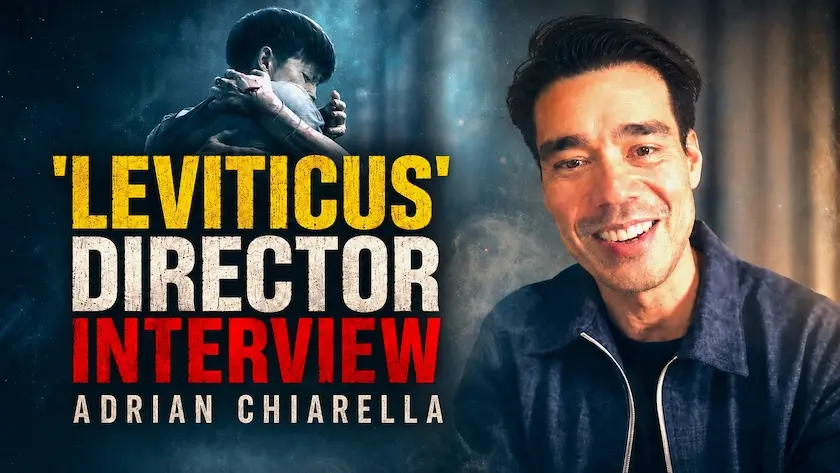
Edward Berger, the director behind All Quiet on the Western Front and Conclave, has signed on to direct the long-awaited follow-up for Paramount. Pitt will reprise his role as former United Nations investigator Gerry Lane and produce through Plan B alongside Dede Gardner and Jeremy Kleiner. British playwright and screenwriter Dennis Kelly, whose credits include the Utopia series and Matilda: The Musical, has written the screenplay, although story details remain firmly under wraps.
More on Screen Realm:


Deadline broke the news, reporting that Berger will also executive produce. Berger has already worked with Pitt, having directed him in upcoming A24 film The Riders. Pitt reportedly began talking to the filmmaker about World War Z 2 early in that production, believing he was the right person to take it on. Those discussions clearly went somewhere, with Berger ultimately signing on after the pair finished their first film together.
Paramount revealed at CinemaCon earlier this year that another World War Z was back in development, but Pitt’s return and Berger’s appointment make this feel considerably more real than another vague promise that the zombies might one day return. The renewed push also appears to go higher up the studio food chain. The Hollywood Reporter reports that after Skydance took over Paramount in 2025, the sequel was made one of the studio’s priorities.
It’s Been a Very, Very Long Road to World War Z 2

Calling this sequel “long-awaited” barely covers it. The original World War Z arrived in 2013, and Paramount wasted little time trying to get another one moving. J.A. Bayona, the Spanish filmmaker of The Impossible and The Orphanage who would later direct Jurassic World: Fallen Kingdom, was announced as director that same year, with Peaky Blinders creator Steven Knight eventually brought aboard to write.
Bayona later departed, the screenplay changed and a planned June 2017 release date came and went without cameras ever rolling. Kelly was subsequently brought in to rewrite Knight’s screenplay, meaning the writer attached to this latest incarnation has actually been trying to crack World War Z 2 for years.
Then David Fincher entered the picture, and the possibility of Pitt reuniting with his Se7en, Fight Club and The Curious Case of Benjamin Button director suddenly made World War Z 2 a much more intriguing proposition. Fincher worked closely with Kelly on the screenplay, at one point revealing that they had already spent around a year developing the material.
Fincher’s version progressed far enough to enter pre-production, with plans reportedly taking shape for an ambitious international shoot. In 2019, however, Paramount pulled the plug. Budget concerns were a major issue, but there was another complication: reports at the time said China’s restrictions on zombie films also factored into the studio’s calculations, effectively taking one of the world’s biggest theatrical markets off the table for an enormously expensive blockbuster.
The production was reportedly heading towards a budget of around US$200 million before it collapsed, leaving Fincher’s take on the franchise as another tantalising blockbuster that never made it in front of cameras.
For years after that, World War Z 2 appeared effectively dead. Now, seven years after Fincher’s version collapsed, the project is somehow moving again, with one of the same writers still along for the ride.
The First World War Z Was Pretty Much a Miracle

Of course, production chaos is practically part of this franchise’s DNA. Loosely based on Max Brooks’ 2006 bestseller World War Z: An Oral History of the Zombie War, Marc Forster’s first film became one of the more notorious blockbuster productions of the early 2010s, with Pitt later acknowledging that filming had begun before the story’s ending was properly figured out. That’s hardly an ideal position when hundreds of millions of dollars are already being poured into a giant international production.
The original third act involved a huge battle in Russia, but after it had been filmed, the filmmakers decided it simply wasn’t working. Lost and Prometheus writer Damon Lindelof was brought in to help figure out how to save the movie, with Drew Goddard (The Martian) subsequently joining the rewrite process and Christopher McQuarrie (Mission: Impossible franchise) also working on material. A substantial chunk of the ending was ultimately thrown out and replaced with the much smaller, suspense-driven World Health Organization sequence that made it into the finished film.
Vanity Fair‘s extensive reporting on the troubled production detailed around 40 minutes of rewriting and reshoots, with the budget reportedly climbing to roughly US$200 million.
And somehow, that still wasn’t the strangest thing to happen. While the production was shooting in Hungary, the country’s counter-terrorism unit raided a warehouse near Budapest and seized 85 firearms intended for the film. The weapons had arrived with paperwork saying they were non-functional props, only for authorities to determine that they had not been fully disabled.
So, yes, the zombie movie with an unfinished ending, an enormous budget and costly reshoots also managed to have actual counter-terrorism officers confiscate its guns.
And Then It Became a Massive Hit Anyway

By the time World War Z finally arrived in cinemas, the stories surrounding its production made it sound like a blockbuster headed for disaster. Instead, audiences showed up in force.
The film earned approximately US$540.5 million worldwide, turning what had looked like a potential studio nightmare into a major global hit. For years, it also stood as the highest-grossing film of Pitt’s career as a leading man.
It took F1: The Movie to finally knock it off that perch. As we previously reported, the racing blockbuster overtook World War Z in 2025 and ultimately raced beyond US$630 million worldwide. Given that kind of performance, it’s not difficult to understand why Paramount has never completely let this franchise die.
Berger is also a genuinely interesting choice to revive it. All Quiet on the Western Front showed that he can handle enormous scale, brutality and chaos, while Conclave proved he can generate serious tension from people simply sitting in rooms and talking. Somewhere between those two skill sets lies a pretty useful toolkit for a movie about thousands of sprinting zombies.
There is still no announced production start, supporting cast or release date, so after everything this sequel has already been through, nobody should be treating it as a sure thing just yet. Still, with Pitt back, Berger aboard and a screenplay now in place, World War Z 2 is in a more concrete position than it has been for years.

More: